
Writing a Boat Scope of Work that Gets Quality Bids
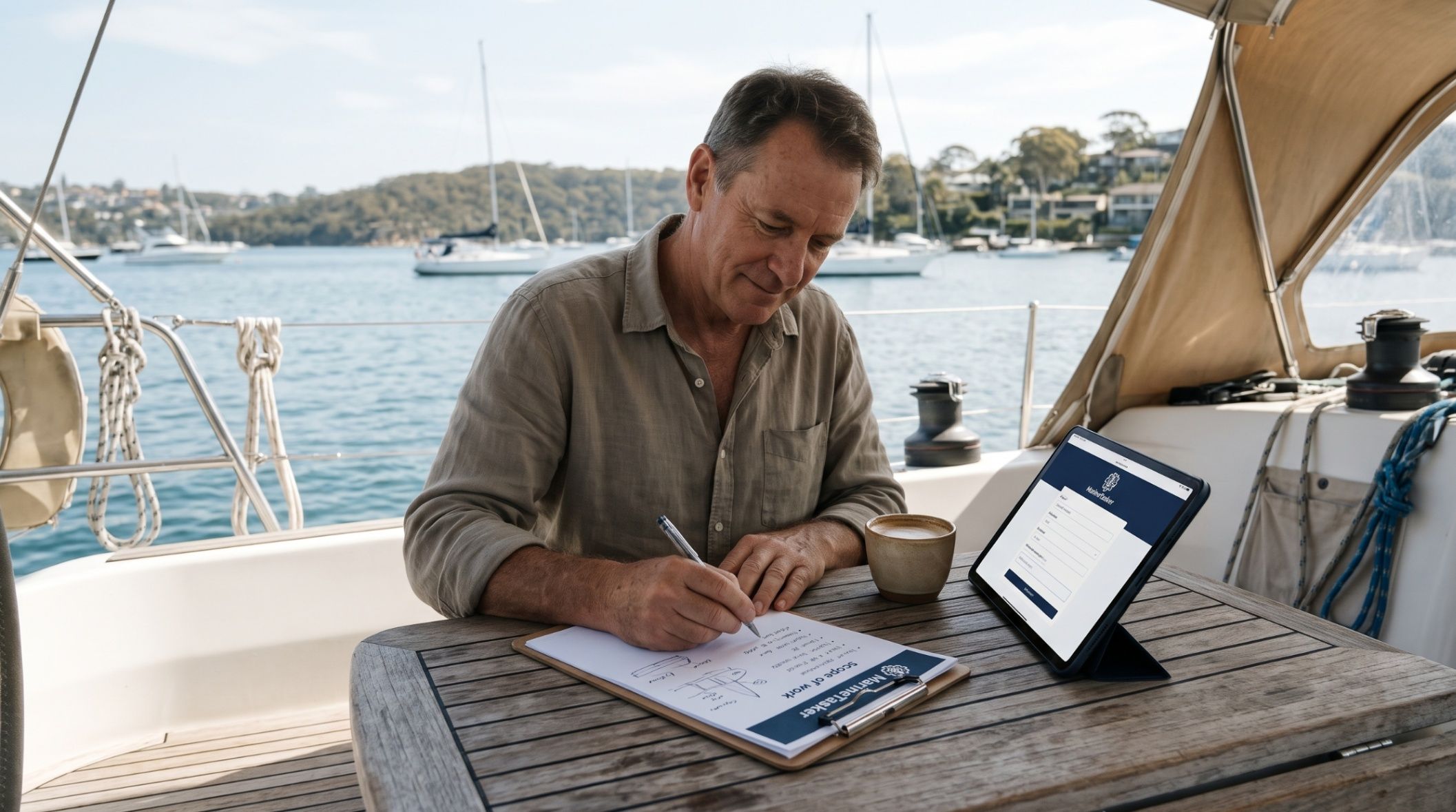
Phone tag turns a simple boat job into a frustrating loop: explain the issue to one tradie, repeat it for the next, send photos after someone asks, then try to make sense of quotes based on different assumptions. The job brief is where quality starts. The clearer the scope, the easier it is for providers to decide whether the work fits and prepare a useful quote.
Why the scope matters
Providers price what they can understand. A brief like “engine playing up, have a look” gives little to work with. It may lead to follow-up questions, a broad estimate or no bid at all, not because the issue can’t be fixed, but because the provider doesn’t yet know what’s involved.
A stronger brief says what’s happening, where the boat is, what information is available and what outcome the owner wants. That helps potential bidders distinguish between work for Marina-Compliant Trades and jobs that may suit Capable Local Hands. Safety-critical, regulated or specialist work should be matched with appropriately qualified trades.
MarineTasker’s planned marketplace workflow is designed around posting a job once, then reviewing offers and chatting with bidders. It aims to reduce the need to ring around by giving local providers one well-described task to assess. MarineTasker is a platform that connects owners and providers; it doesn’t carry out the work or decide which qualifications a job requires.
The owner’s scope checklist
Start with the same sort of information shown in MarineTasker’s illustrative sample job: Riviera 38, C24 / Dry Dock, 100hr Service & Anodes, target budget $850. That sample isn’t a standard price. It demonstrates how vessel, location, job and budget details make a post more useful.
Include:
- Vessel: make, model and, where relevant, year and length.
- Location: marina, berth, swing mooring, slipway or driveway; explain the access arrangement.
- Job: describe the task or observed issue specifically.
- Budget: share a target budget to help set expectations.
- Photos and records: show the relevant area and provide known service details.
- Timing: state preferred dates and any access or scheduling constraints.
Take photos that answer questions
A few useful images can save several rounds of messages. Aim for clear, well-lit shots that show both the overall context and the detail:
- A wide view of the engine bay or work area.
- The engine or equipment identification plate, if safely accessible.
- A close-up of the affected fitting, damage or suspected issue.
- The berth, boat position or access route when it affects the job.
Caption the photos in plain language: for example, “starboard engine, aft side” or “anode at stern drive”. Don’t remove guards or disturb equipment to get a picture. If you’re unsure whether an area is safe to access, leave it for a qualified provider to inspect.
At completion, timestamped before-and-after photos are planned as part of MarineTasker’s job records. They’re intended to help owners keep a clearer visual history of completed work.

Add engine details and service history
For engine-related work, include the make and model, approximate engine hours, last known service date and any symptoms you’ve noticed. Note when the issue occurs, such as during start-up or under load, and whether an alarm or warning appeared. If you don’t know a detail, say so rather than guessing.
A photo of the identification plate can help a provider check what equipment is fitted. A short service history can also help explain what’s already been done. MarineTasker’s digital vessel logbook, planned for launch, is intended to link completed tasks, part numbers and verified photos to a boat’s HIN.
Make access practical
A provider needs to know more than the waterway. Explain whether the boat is in a marina berth, on a swing mooring, on a slipway or on a trailer at home. For a mooring, say whether a tender is needed and how the transfer will work. For a marina, include the gate or check-in process, parking instructions and any known site requirements.
Mention other constraints that could affect the quote or schedule: tide, haul-out booking, access hours, shore power, or whether the boat needs to be moved. Don’t post sensitive gate codes publicly; arrange those details through appropriate private communication.
Site requirements are planned to be surfaced before a provider accepts a job. Until then, giving clear access details in the brief helps both sides identify likely issues early.

Be straightforward about budget and timing
A target budget gives providers a useful point of reference, but it isn’t a guarantee that every quote will match it. If the issue may need diagnosis before the work is clear, say so. Share your preferred completion window and whether you have flexibility.
| Brief detail | Vague brief | Well-scoped brief |
|---|---|---|
| Job description | “Engine needs a look” | “100-hour service and anodes; include an inspection of the reported issue” |
| Photos | None or sent later | Relevant area, equipment plate and access context |
| Access | “Boat’s in Pittwater” | Berth or mooring type, tender needs and known site requirements |
| Budget and timing | Not stated | Target budget and preferred work dates |
| What providers can assess | Limited information; more questions may follow | Clearer basis to judge fit and prepare a quote |
| Job history | Details kept in separate messages and files | Planned HIN-linked records for completed tasks |
A well-written brief doesn’t guarantee more bids, a particular price or a dispute-free job. It does make the work easier to understand and gives both sides a better starting point for agreeing what’s included.
From post to payment
MarineTasker’s intended three-step workflow is: select the vessel and describe the job, location and target budget; review offers and chat with bidders; then inspect completed work and record the outcome. The job post and app screens shown on the website are illustrative previews, not live activity.
For the planned January 2027 Greater Sydney and Broken Bay launch, upfront safe payments are intended to secure funds before work begins, with payment released after the owner inspects and signs off dockside. This feature isn’t live during pre-launch. A digital vessel logbook linked to the HIN is also planned.
A tradie’s tip for owners
Tradie tip: “The best briefs read like the job’s already half-inspected. If I can see the affected area, the engine details and how to reach the boat before I quote, I can prepare a more useful response and plan my arrival.”
Clear communication helps beyond the quote. MarineTasker’s two-way ratings are designed to let owners review workmanship and providers rate the experience of working with a client. Clear scopes, practical access and prompt sign-off can help owners build a positive reputation that encourages good providers to work with them again.
MarineTasker is preparing its Open Beta for Greater Sydney and Broken Bay, including waterways such as Sydney Harbour, Pittwater and Port Hacking. Early owner registrants can claim $25 toward their first service and a free lifetime HIN Digital Logbook. Read more about the MarineTasker platform and register for the Open Beta.
Register for the Open Beta at marinetasker.io/beta to claim the founding boat-owner perks during the pre-launch period. Many hands make light work.
Frequently asked questions
What should a boat repair job brief include?
Include the vessel and engine details, a specific description of the work, photos, location and access arrangements, timing, and a target budget.
Should I include photos when requesting marine-service quotes?
Yes. Clear photos of the affected area, relevant identification plates and access conditions help providers understand what they’re being asked to quote.
Does MarineTasker’s payment protection work during pre-launch?
No. Upfront safe payments are planned for launch and aren’t live during the pre-launch period.
Get first access to verified dockside care.
Join the Sydney Harbour & Broken Bay Open Beta. Lock in $25 toward your first Task or secure a 10% Founding Provider spot.
Lock In Founding Access