
Pittwater & Broken Bay: The Unique Logistics of Servicing Vessels on Swing Moorings
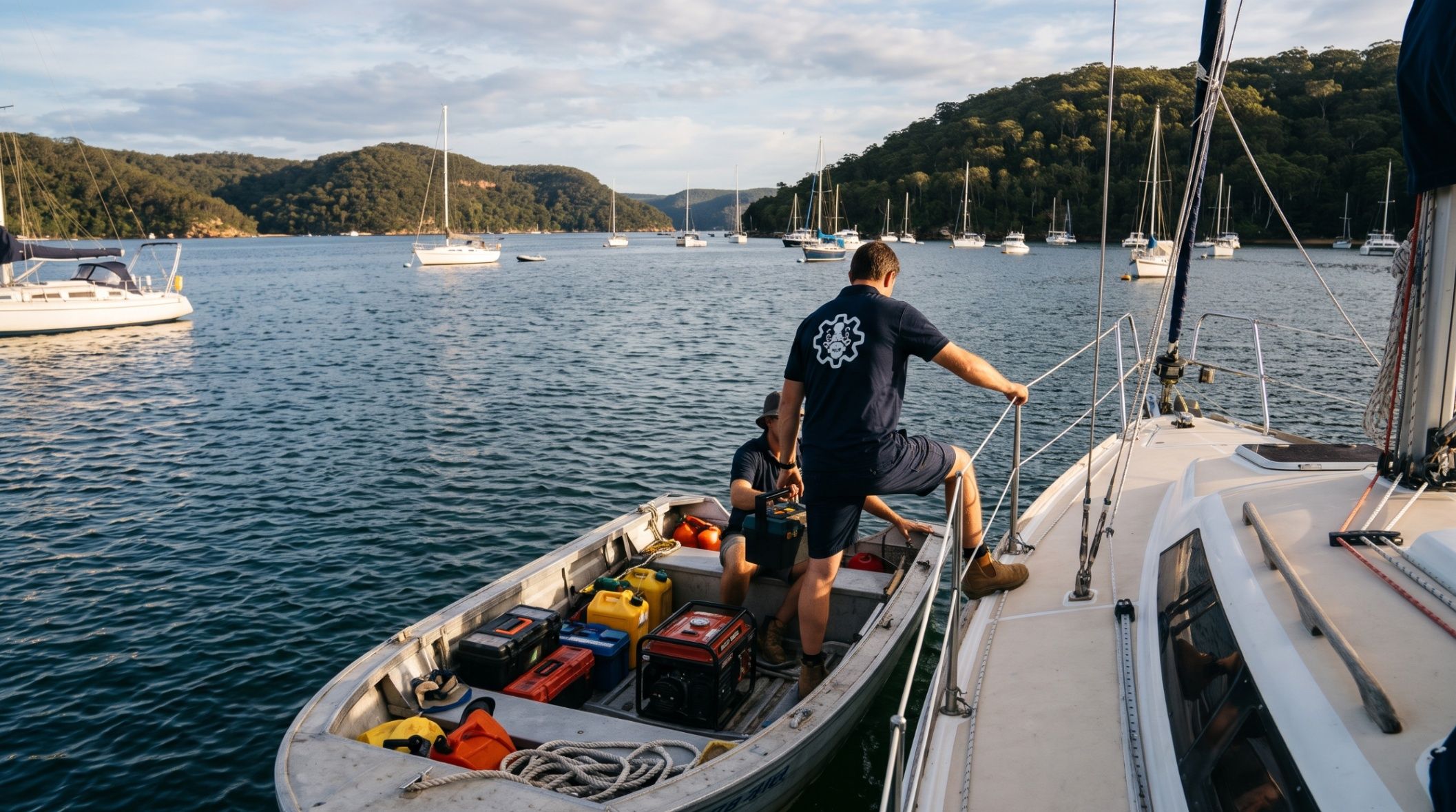
A service visit to a swing-moored boat in Pittwater needs an access plan as well as a work scope: the trade has to reach the vessel, transfer tools and parts, and allow for conditions on the water. That matters in a waterway where many boats sit away from a road-accessible wharf and communities including Scotland Island, Elvina Bay, Lovett Bay and Coasters Retreat rely on water transport.
Pittwater is the southern arm of Broken Bay, between Barrenjoey Headland and the Northern Beaches. From Palm Beach and Careel Bay to Church Point, McCarrs Creek and the western foreshores, the same maintenance job can involve very different travel and transfer requirements. On the Hawkesbury side of Broken Bay, access arrangements can vary again around places such as Dangar Island and Brooklyn.
Start with the access method
Not every boat on a mooring can be reached by stepping off a marina berth. A provider may need to use their own workboat or tender, arrange a water taxi, or coordinate a work barge for heavier equipment. Some owners can help by arranging a lift from a public wharf, but that plan should be agreed in advance.
Scheduled ferry routes serve a number of Pittwater communities. The Northern Beaches Council transport guide describes Church Point services to western-foreshore locations and Palm Beach services to places including Coasters Retreat, The Basin, Currawong and Great Mackerel Beach. These are passenger services, however, so don’t assume they can carry trade tools, parts or bulky materials. For flexible transfers, owners and providers can look into charter water taxis or use a suitable workboat, confirming capacity and arrangements directly.
| Job location | Access for the trade | Common extra logistics | Typical cost drivers |
|---|---|---|---|
| Marina berth | Usually direct from shore or marina access | Confirm access hours, parking and any marina requirements | Work scope, berth access and time on task |
| Swing mooring | By tender, workboat, suitable water taxi or agreed shuttle | Transfer of people, tools and parts; weather and timing plan | Water travel, fuel, loading, extra trips and possible crew |
| Slipway or hardstand | Vessel must reach a suitable facility | Confirm facility, booking, vessel limits and onward access | Haul-out, yard time, transport and work scope |
A swing mooring isn’t a casual landing point. Agree where the trade will board, how tools will get aboard and what happens if the weather changes. Public wharves also have access requirements: check Transport for NSW wharf access information rather than assuming a commercial vessel can use any convenient berth or wharf.

Plan the parts run before the first trip
Parts delivery can be simple when an item fits safely in a tender. Larger or awkward equipment may need another arrangement, such as delivery to an agreed wharf followed by a transfer to the vessel. Make sure the provider knows what’s needed and whether the owner can receive or move the item.
A forgotten component can mean another journey across Pittwater. That second run can add meaningful time, fuel and scheduling pressure, particularly when the job depends on a suitable weather window or a water taxi booking.
Tradie tip: Confirm the parts list and delivery plan before departure. A second run across Pittwater can cost more than the part that was left behind.
A useful remote-mooring job brief should include:
- The bay and a clear location description, plus a location pin or other agreed way to find the vessel.
- Vessel type, approximate size, access constraints and the best way to identify it.
- The proposed pickup point and who is arranging the trip to the boat.
- The tools, materials or parts expected to be required, and how they’ll be transferred.
- A weather contingency and any relevant timing constraints.
- A plan for packaging, used parts and other waste to be brought back ashore.
When the job needs a barge or lift-out
Some work can be completed safely from a tender or while the vessel is afloat. Other jobs (such as mast removal, engine lifts or substantial hull work) may need a barge or crane barge and an experienced operator. Ask the provider who is arranging the equipment, what it can handle, how the vessel will be positioned, and whether any other specialist is required.
For underwater work, antifouling or other jobs that need the vessel out of the water, confirm the facility and its limits before agreeing to a date. For example, Careel Bay Marina advertises swing moorings and a tender service, and its site describes a three-cradle incline slipway for out-of-water work. Check current operating details and suitability directly; don’t assume a particular lift method or capacity.
Barge work also needs a clear plan for equipment and waste. Ask how waste will be contained and removed, and whether the job has any site-specific requirements. For any work involving a lift, crane or heavy component, agree responsibilities and safety arrangements with the relevant qualified operators.
When you job requires a barge, first see if it would be easier to get to dry dock, even if it requires a tow.
Price the whole job, not just the repair
Remote moorings can limit the number of providers willing or able to travel, so access reliability matters to both sides. A clear job scope helps the owner compare proposals on more than the labour task alone, while allowing the provider to account for water travel and equipment needs.
Ask providers to make the quote clear about:
- Labour and estimated time on the vessel.
- Water travel, fuel and any transport or transfer charges.
- Additional crew, barge or specialist equipment, if required.
- Parts, delivery and any second trip that may be needed.
- Weather, timing or access assumptions.
- Waste handling and removal.
The table’s cost drivers aren’t fixed rates; they’re prompts for an itemised conversation. Compare like with like, and confirm what’s included before work starts. For a lift-out, check the vessel’s length, beam, draft and displacement against the facility’s current requirements before booking.
Make the scope and record useful
MarineTasker is a two-sided technology platform and workflow facilitator, not a marine contractor. Its planned Greater Sydney & Broken Bay launch in January 2027 is intended to support clearer job scoping, provider profiles and job records. Planned workflow features include licence and insurance checks, induction evidence on profiles, site requirements surfaced before acceptance, job photos and records, and a digital vessel logbook linked to the vessel’s HIN. These are planned features, not claims that they’re already live; site inductions and check-in/check-out records are part of a future roadmap.
The platform’s payment protection is also planned for launch: upfront safe payments are intended to help protect both parties, with payment released following completion and owner sign-off. MarineTasker’s standard commission is 15%+ on tiered plans, excluding GST and platform fees. Eligible early trade and skilled-hand registrations can currently claim the founding offer of a 10% commission on their first 20 jobs or six months, with $0 monthly subscription fees during beta; terms and eligibility are available on the Open Beta page.
A useful job record can help the next person understand what was done, what parts were fitted and what access arrangements worked. That’s especially valuable when a boat changes mooring or has to be reached from a different shore point. With the right plan, owner, provider and any additional hands can coordinate the trip efficiently: many hands make light work.
Claim the available founding perks and join the pre-launch Open Beta at marinetasker.io/beta ahead of the January 2027 Greater Sydney & Broken Bay launch.
Frequently asked questions
Can a trade use a public ferry to carry tools to my mooring?
Ferries serve communities around Pittwater, but they’re passenger services, not a guaranteed freight option. Confirm arrangements directly and discuss a suitable gear-transfer plan with the trade.
Why can a swing-mooring service job cost more than the same work at a marina?
Water travel, tool transfers, extra crew or equipment, weather and tide constraints, and the possibility of a second parts run can all add time and cost.
What should I include when booking a remote mooring job?
Give the precise location, vessel details, access and gear-transfer arrangements, parts information, weather contingency and a plan for removing any waste.
Get first access to verified dockside care.
Join the Sydney Harbour & Broken Bay Open Beta. Lock in $25 toward your first Task or secure a 10% Founding Provider spot.
Lock In Founding Access