
Preventing the Tow of Shame: 5 Preventative Checks for Marine Batteries and Raw Water Systems
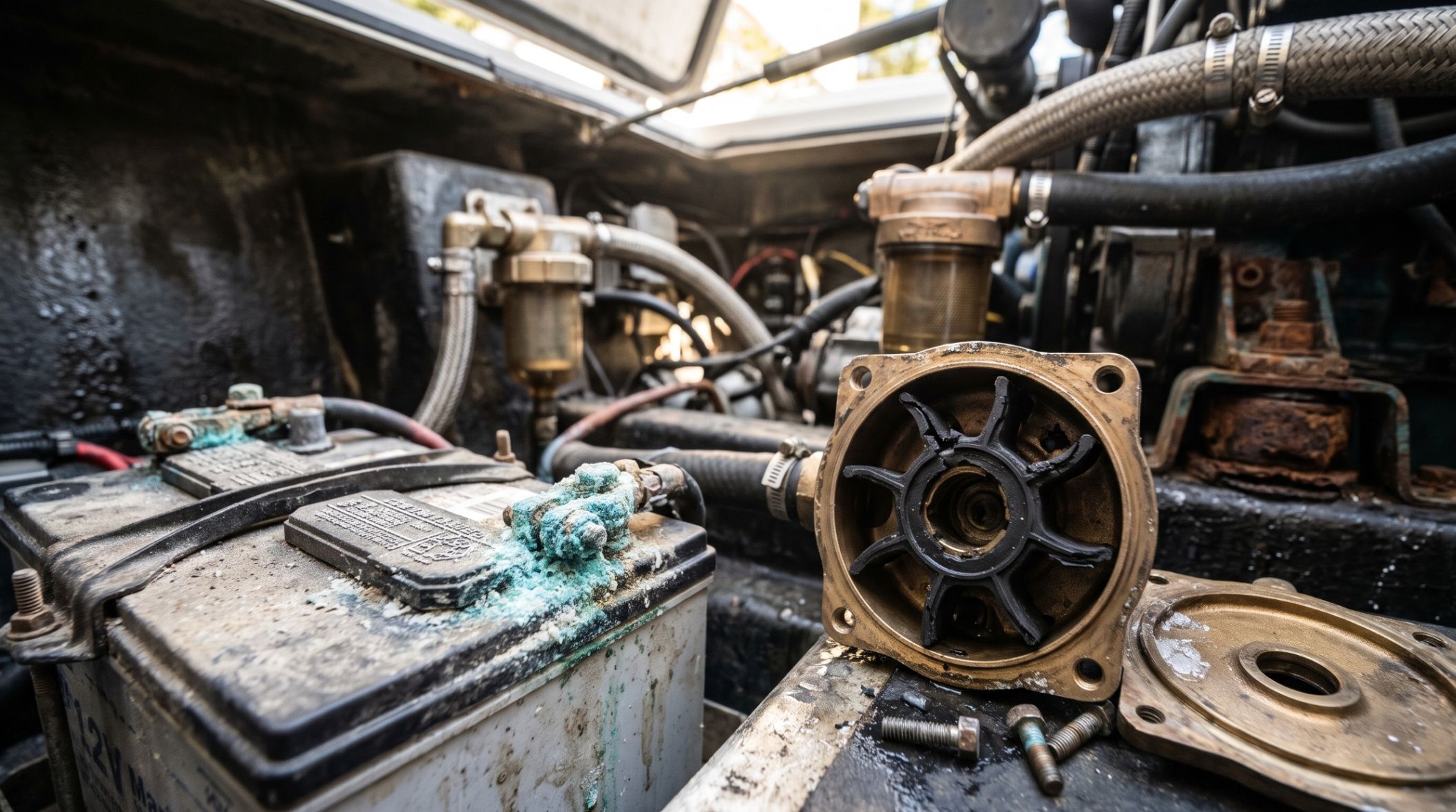
Before leaving a ramp or marina, check the battery, fuel system, cooling-water flow and engine belts: five routine inspections can catch common faults before they turn into a tow back from Middle Harbour or off Barrenjoey.
A breakdown can happen to any boat owner, and there’s no shame in calling for help when one does. But a flat battery, blocked filter or cooling fault is often easier to address before departure than when the boat is drifting. NSW Government guidance lists engine, fuel, mechanical and battery failures among the major causes of powered-vessel breakdowns, and recommends regular professional servicing.1

Five checks before you go
| Check | What to look for | Owner or trade job | Consequence if missed |
|---|---|---|---|
| Battery and 12V connections | Corrosion, loose clamps, low charge, insecure hold-down | Visual checks and cleaning; mechanic for faults or testing | Engine may not start; electrical equipment may fail |
| Water-separating fuel filter | Water or debris in the bowl; service interval due | Follow the manual; seek help if unsure | Rough running, fuel-system damage or engine stoppage |
| Fuel lines and primary filters | Cracks, leaks, loose connections, blocked filter, stale fuel | Visual checks; trade for diagnosis or repairs | Fuel starvation, leaks or hazardous fumes |
| Raw-water cooling system | Impeller interval, clear strainer, sound hoses and water flow | Owners can check visible flow; mechanic for repairs | Overheating and serious engine damage |
| Belts and accessories | Cracks, glazing, wear and correct tension | Visual check with engine off; trade for adjustment or replacement | Charging or cooling-system failure |
1. Battery health and 12V terminal corrosion
A battery can look fine and still lack the charge to start an engine reliably. Check its condition and charge according to the battery and engine manuals. A load test can help assess performance, particularly if the battery has struggled to crank or has been unused for an extended period.
Look for the white or green crust that can form around terminals. With the engine and electrical systems safely isolated as directed by the manufacturer, clean corrosion, secure the clamps and apply a suitable terminal protectant. Check that the battery is firmly held down, the main fuse or circuit breaker is intact, and the cranking battery is appropriate for the engine. House loads shouldn’t quietly drain the battery needed for starting.
Battery life varies with type, use and care; age alone doesn’t tell the whole story. If yours is approaching the end of its expected service life, ask a marine mechanic to assess it before a longer trip.

2. Water-separating fuel filter
Where fitted, inspect the water-separating filter bowl for water or debris at the service interval, and before a longer trip if the manufacturer recommends it. Replace the filter element on schedule. Water or contamination in petrol or diesel can cause rough running and damage fuel-system components.
Draining or replacing a filter isn’t the right task for everyone. Follow the engine manual, keep fuel away from ignition sources and dispose of it responsibly. If you see water, repeated contamination or signs of a leak, have the system checked rather than simply carrying on.
3. Primary fuel filters, lines and connections
Give accessible hoses and connections a visual check for cracks, hardening, perishing, loose clamps or signs of leakage. On an outboard, check the fuel line and connectors, and gently confirm the primer bulb behaves as expected. Make sure the tank breather is clear and consider whether fuel left sitting for a long period needs attention under the manufacturer’s guidance.
Never start the engine if you smell fuel or suspect a leak. This is especially important on inboard petrol boats, where vapour can collect in the bilge. Ventilate as instructed in the vessel’s safety guidance and get a qualified person to investigate before restarting. NSW’s fuel-safety advice also recommends regular inspection of fuel hoses, joints and clamps.2
4. Raw-water cooling system
For an outboard, check that cooling water flows from the telltale as expected once the engine is running. It’s a useful visual check, but it doesn’t prove every part of the cooling system is healthy.
On an inboard, check the raw-water strainer, seacock position, visible hoses and clamps. Look up the impeller’s inspection or replacement interval in the engine manual. Inboard systems may also include a thermostat and heat exchanger that need inspection or servicing by a mechanic.
Marine mechanic’s tip: If the engine overheats underway, stop it as soon as it’s safe to do so. Don’t limp home: the extra running time can turn a cooling fault into substantial engine damage.
An alarm or sudden loss of cooling-water flow needs prompt attention. Stop, assess the conditions, anchor if appropriate and call for assistance. Don’t restart simply to see whether the problem has gone away.
5. Belts and drive accessories
With the engine switched off, check accessible belts for cracking, fraying, glazing or contamination. Don’t guess at belt tension: the correct setting is model-specific, so use the engine manual. A loose or damaged alternator belt may affect charging; on some inboards, a belt also drives a cooling-water pump.
Check alternator charging using the method and specifications in the manual. If you’re unsure about readings, adjustment or safe access, book a marine mechanic. Keep the correct spare belt and tools aboard if recommended for your engine, and make sure someone knows how to use them.

Quick pre-start check
Before setting off from a ramp at Botany Bay or a marina in Pittwater, take a moment to confirm:
- Battery is charged, secure and free of obvious terminal corrosion.
- Cooling-water telltale is flowing on an outboard.
- There’s no fuel smell, visible leak or damaged fuel line.
- Bilge condition is normal, and engine hoses and belts look sound.
- The engine starts and runs as expected; alarms are working.
These checks don’t replace the manufacturer’s service schedule or an annual professional service. Owners can handle many visual checks, but fuel-system diagnosis, impeller replacement, belt servicing and electrical faults are better scoped to a suitably qualified marine mechanic.
If a breakdown still happens
Put safety first. Stop the engine if it’s unsafe to run, anchor if conditions and location allow, and contact the appropriate assistance service by VHF or another available means. Follow the NSW Government’s breakdown guidance, and keep passengers informed. Once safe, note what happened and any warning lights or unusual sounds; that record can help a mechanic diagnose the fault.
MarineTasker is building a two-sided platform to help owners scope jobs and connect with marine trades or capable skilled hands. For the planned January 2027 Greater Sydney and Broken Bay launch, job records and a digital vessel logbook are on the roadmap, alongside licence and insurance checks. Upfront safe payments are also planned, not live today. MarineTasker won’t perform the work or determine a provider’s qualifications.
During Open Beta, early registrants can claim available founding perks: $0 monthly subscriptions during beta and, for trades, a 10% founding commission on the first 20 jobs or six months, whichever comes first. That figure excludes GST and platform fees; standard commission is 15%+ on tiered terms, also excluding GST and platform fees. No lock-ins or credit card are required. Boat owners can also claim a $25 Welcome Credit.
Join the MarineTasker Open Beta and claim available founding perks. Many hands make light work.
Footnotes
Frequently asked questions
How often should a boat battery be checked?
Check its charge, terminals and security before trips, and follow the battery and engine manufacturers’ guidance for testing and replacement.
Can a boat owner replace a raw-water impeller?
Some experienced owners can, but the correct procedure and interval depend on the engine. If unsure, use a qualified marine mechanic.
What should I do if my engine overheats underway?
Stop the engine as soon as it is safe to do so, anchor if appropriate, and call for assistance. Don’t keep running it to try to reach the ramp.
Get first access to verified dockside care.
Join the Sydney Harbour & Broken Bay Open Beta. Lock in $25 toward your first Task or secure a 10% Founding Provider spot.
Lock In Founding Access