
Taking Development In-House: Why We Parted Ways with Agency Dev to Build at Startup Velocity
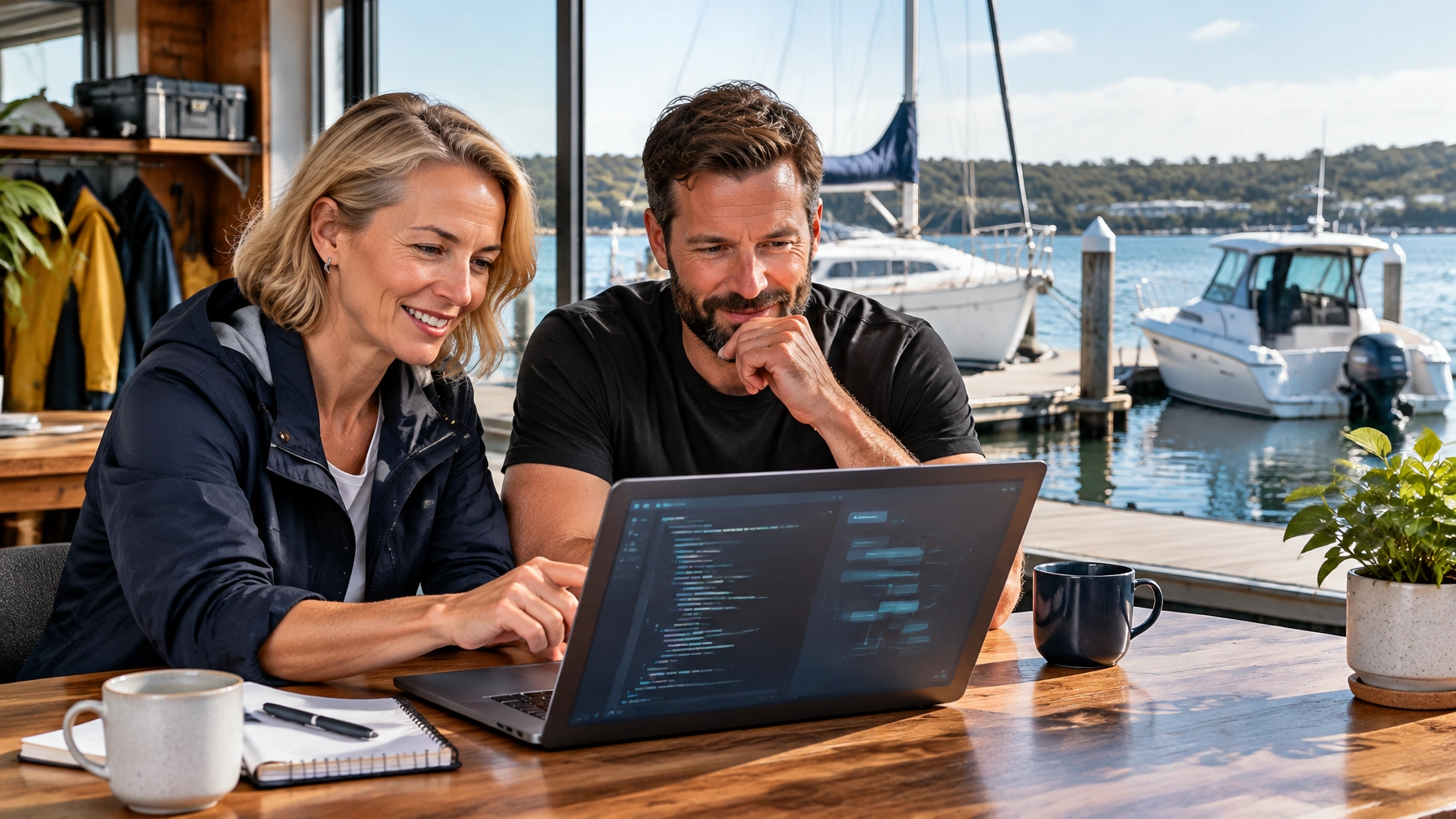
For a pre-launch marketplace, keeping product decisions, core code and customer feedback close together can make the difference between a slow handover and a useful next release. That’s why MarineTasker moved from agency development to building its platform in-house.
It wasn’t a verdict on agencies. External development helped MarineTasker get early work moving. But as the product took shape, its needs changed: the team needed to learn quickly, make decisions without a long handover, and stay close to the details that make a two-sided marketplace work.
Why the development model had to change
MarineTasker connects boat owners with verified marine professionals and capable local hands. That means the product has to support different users, different types of work and the practical realities of getting a job done at a marina, on a mooring or in a boatyard.
In a marketplace built on trust, small details matter. A clearer job scope, a better way to review a quote or a more useful service record can affect both sides of the transaction. The team needs to test those ideas, learn what works and adjust the product without losing momentum at each step.
Working with an external agency can be an effective way to move an early concept forward. But across time zones, feedback can take longer to reach the people building the product. Specifications and handovers can add friction, and it can be harder for founders to maintain direct control of the codebase and day-to-day roadmap.
For MarineTasker, the trade-off shifted. Product learning speed became more important than the convenience of outsourcing the build.
Martin’s product-architect approach
Martin Sheridan brings more than 30 years’ experience as a technology leader and solution architect. His product-architect vision, shaped by agile and lean-startup practice, is straightforward: build small, test early, measure honestly and iterate.
That approach favours owning the core and shipping in stages. Instead of trying to build every possible feature at once, the team can focus on the workflows that matter, check assumptions and refine the product as it prepares to meet its first launch corridor.
The MarineTasker story explains the problem the platform is designed to address: boat owners can struggle to find dependable dockside help, while good trades can lose time chasing leads and unpaid invoices. Product decisions need to respond to those practical problems, not just look good in a specification.
Agency development and an in-house build
The shift is about choosing the right operating model for this stage of the product, not declaring one approach universally better.
| Area | External agency development | In-house development |
|---|---|---|
| Feedback loops | Can involve handovers and scheduled communication | Product feedback can reach developers directly |
| Codebase | Ownership and access depend on the project arrangement | Core code and technical decisions stay within the company |
| Security and quality | Responsibilities need to be clearly coordinated | The company is directly accountable for its build practices |
| Iteration speed | Changes may need additional scoping and coordination | Small changes can be tested and prioritised internally |
| Roadmap control | Shared across client and delivery team | Product priorities remain close to the founders |
| Cost structure | Useful for defined projects or specialist capacity | Requires ongoing internal capability and investment |
Agency partners can bring valuable expertise and capacity. But where a product depends on frequent decisions about its core workflows, internal ownership makes it easier to keep technical choices and customer needs connected.
Using modern tools without skipping the hard work
In-house development also gives MarineTasker the opportunity to make careful use of AI-assisted coding tools, modern cloud infrastructure and automated testing and continuous integration practices.
AI can help developers explore options, draft or explain code and reduce repetitive work. It doesn’t replace product judgement, security review or the discipline of checking that a change behaves as intended. Research from Thoughtworks on AI-assisted software development also highlights the need to balance potential productivity gains with appropriate trust and review.
The principle is simple: use tools to shorten the cycle, not to skip the checks. A lean team can move quickly when it combines AI assistance with clear technical ownership, tests and human review.
Building towards what users need

Taking the build in-house is ultimately about making better product decisions before launch. MarineTasker is preparing planned features including upfront safe payments, two-way ratings and a digital vessel logbook linked to a boat’s HIN. These features are not live yet; they’re part of the product being developed for the Open Beta.
Each one depends on careful design. Owners need confidence around job payments and a useful history of work completed. Marine professionals and skilled hands need clear scopes, fair processes and a reliable way to build trust with customers. Those needs should inform the product as it’s built, not be lost in translation between feedback and development.

The first launch is planned for January 2027 across Greater Sydney and Broken Bay, including Sydney Harbour, Pittwater, the Hawkesbury River and Port Hacking. A corridor-by-corridor rollout gives MarineTasker a defined place to learn, refine and build local marketplace activity before expanding further.
Many hands make light work, but the core product needs clear ownership. Bringing development in-house helps keep that ownership close to the people shaping the platform and the boaters it’s intended to serve.
Join the Open Beta waitlist
MarineTasker is building towards its Greater Sydney and Broken Bay launch in January 2027. Boat owners, marine professionals and skilled hands can join the Open Beta waitlist for free and check the founding perks currently available to early registrants.
Frequently asked questions
Why did MarineTasker move development in-house?
To reduce communication delays, own the core code and roadmap directly, and respond faster to product feedback.
Does this mean MarineTasker believes agencies are the wrong choice?
No. External agency development helped with early progress. The right approach depends on a product’s stage, the work involved and the level of ongoing control needed.
Is the MarineTasker platform live now?
No. MarineTasker is pre-launch, with its Greater Sydney and Broken Bay launch planned for January 2027.
Get first access to verified dockside care.
Join the Sydney Harbour & Broken Bay Open Beta. Lock in $25 toward your first Task or secure a 10% Founding Provider spot.
Lock In Founding Access